№ 16 · NEUROLOGY
Teeth grinding at night: it is not a habit, it is a symptom
June 06, 2026 · QDRO
Your dentist spots wear facets on your molars, or you wake up with a dull ache spreading from your jaw into your temples. The explanation you probably get is one of two things: "you're stressed" or "your bite is off." Both observations contain a grain of truth. Neither gets to the point.
Bruxism — nighttime teeth grinding — is not a habit you can unlearn through willpower. It is not a mechanical misalignment you can correct by filing down a tooth. It is a symptom, and it has a precise neurobiological mechanism. That mechanism begins nowhere near your jaw.
A brain problem wearing a dental mask
For most of the twentieth century, bruxism was classified as a "parafunctional" activity — an abnormal, peripherally driven behaviour of the masticatory muscles. The therapeutic logic that followed was straightforward: muscles contract → teeth wear → fix the peripheral cause. Adjust the occlusion. Build a splint.
In 2013, a consensus of 18 international experts led by Frank Lobbezoo formally dismantled that framework (Journal of Oral Rehabilitation, PMID: 23121262). The new definition redefined bruxism as a rhythmic activity of the masticatory musculature that is regulated primarily by the central nervous system. Not the bite. Not the jaw. The brain.
The signal travels top-down: cortex and brainstem → muscles → teeth. Which means levelling the occlusion or wearing a night guard addresses the endpoint of the signal chain — it does not interrupt the signal itself.
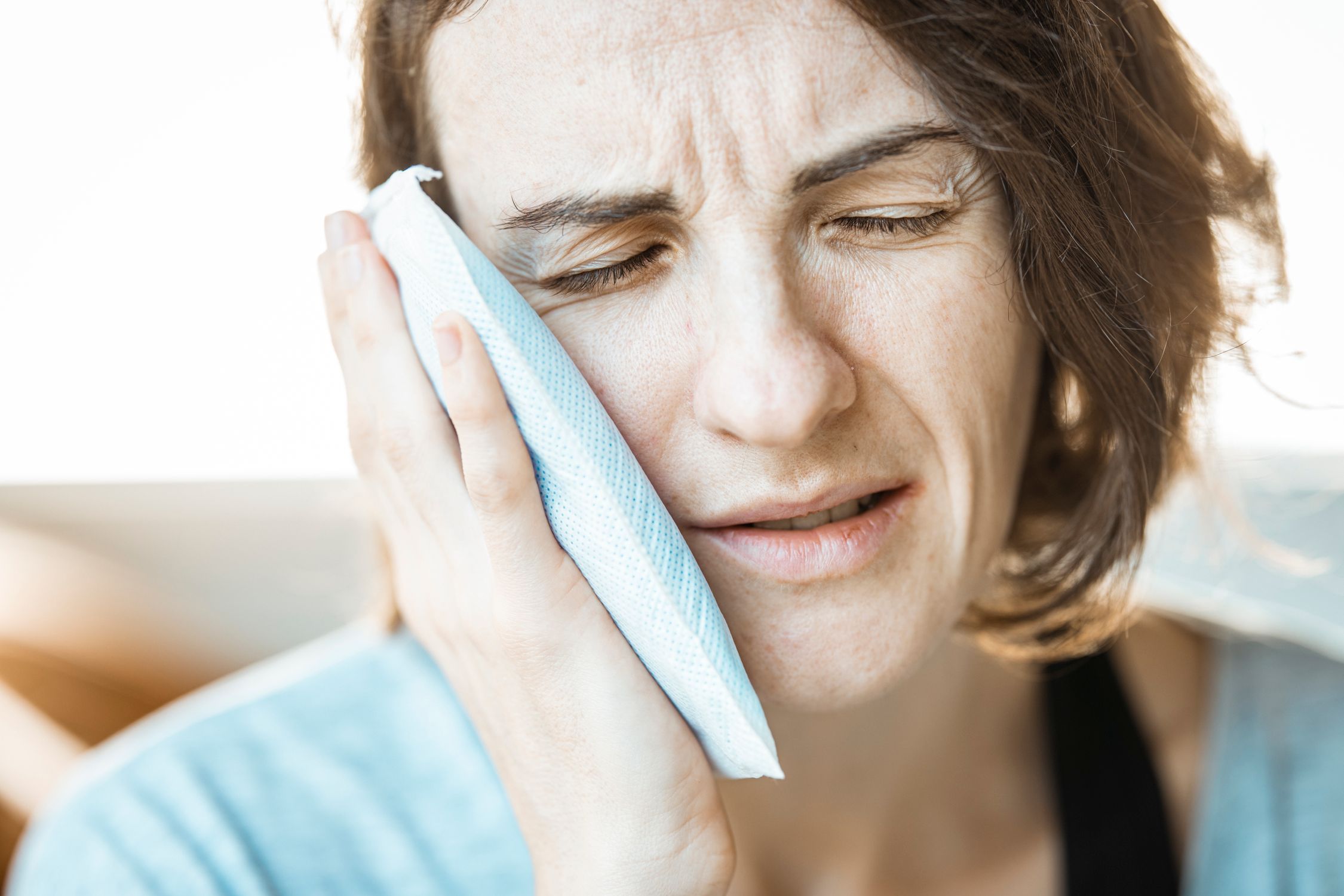
The specific circuit goes like this. Serotonergic neurons in the raphe nuclei project to the ventral tegmental area (VTA), where they synapse with dopaminergic neurons that regulate masticatory motor output. Under chronic stress and elevated anxiety, the serotonin–dopamine balance in these pathways is disrupted — and the jaw muscles begin firing without functional purpose, predominantly during micro-arousals in NREM sleep (Frontiers in Neurology, 2024, PMC: 11473305).
Genetic architecture adds another layer. Polymorphisms in dopamine receptor genes (D2, D3) and serotonin receptor genes (5-HT) create individual vulnerability thresholds: two people under identical stress loads can have entirely different bruxism outcomes, because their receptor sensitivity differs. This is why the advice "just relax" is not only unhelpful — it misunderstands the biology.
A pharmacological footnote that illustrates the CNS dependency perfectly: SSRIs (paroxetine, citalopram, fluvoxamine) are well-documented to increase bruxism frequency as an adverse effect. These drugs alter serotonergic tone in the very circuits that regulate masticatory rhythmicity. Change the brain chemistry — the jaw responds within weeks.
The numbers: who grinds and why sleep apnea matters
A 2024 meta-analysis in the Journal of Clinical Medicine (DOI: 10.3390/jcm13144259) synthesised two decades of research — 2003 to 2023 — across PubMed. The headline: bruxism affects approximately 22% of the global adult population. Sleep bruxism and awake bruxism appear at similar rates (21% and 23% respectively). When polysomnographic recording replaces self-report, the figure for sleep bruxism climbs to 43% — reflecting the well-known gap between what people notice and what actually happens during the night.
North America registers the highest regional prevalence at 31%.
The connection to obstructive sleep apnea (OSA) is the most counterintuitive and clinically significant finding in the field. The largest polysomnographic study of OSA patients to date — 914 adults, mean age 53, mean apnea-hypopnea index 13.9 events per hour — found that nearly one in two OSA patients has concurrent sleep bruxism (Journal of Clinical Sleep Medicine, 2023, PMID: 36448332). More telling: 85.7% of rhythmic masticatory muscle activity (RMMA) episodes occurred in temporal coincidence with cortical micro-arousals.
The mechanism is not coincidental. It is sequential: respiratory event → partial arousal → CNS activation surge → masticatory muscle contraction. Treating the apnea with CPAP therapy meaningfully reduces bruxism episode frequency — because it removes the arousal trigger, not because it does anything to the jaw.
Stress is a well-documented independent pathway. A 2021 systematic review and meta-analysis in the Journal of Oral Rehabilitation (PMID: 33377534) confirmed a significant association between stress and sleep bruxism across ten studies. A parallel review in Frontiers in Neurology (DOI: 10.3389/fneur.2020.590779) screened 1,458 publications and included only six that met rigorous quality thresholds — the attrition rate itself signals how sparse the high-quality evidence base remains — but the directional finding was consistent: the association is strong.
The COVID-19 pandemic provided a rare natural experiment. Researchers at the Universidad Complutense de Madrid tracked three successive cohorts of dental students across three academic years: before the pandemic (2018/2019), during (2020/2021), and after (2021/2022), for a total of 274 participants (IJERPH, 2023, PMC: 9916215). Pandemic-era stress was accompanied by a statistically significant increase in both daytime and sleep bruxism prevalence — a controlled demonstration of the stress-to-bruxism pathway under real-world conditions.
The neurobiological explanation runs through allostatic load. Chronic stress depletes GABA, serotonin, and dopamine reserves and progressively impairs the neural circuits governing involuntary orofacial motor activity (Biomedical Reports, 2024). The brain under load loses regulatory grip over non-functional movements. The jaw is among the first sites where this loss of control becomes measurable.
What to actually do: a priority order
Most people who learn they grind their teeth go straight to the dentist for a mouthguard. The mouthguard is not wrong — it genuinely protects enamel from further wear. But in the hierarchy of interventions, it belongs at the end, not the beginning.
First: rule out sleep apnea. If you grind your teeth and also experience daytime sleepiness, non-restorative sleep, loud snoring, or frequent night wakings, get a polysomnographic evaluation. Half the bruxists with OSA are undiagnosed. Treating the apnea treats the arousal trigger.
Second: screen for anxiety disorder. Bruxism is a somatic marker of chronic anxiety. If grinding intensified during a stressful period and has not resolved since, cognitive-behavioural therapy — not a mouthguard — is the indicated first-line intervention. CBT addresses the dysregulated neural pathway; the guard addresses only its endpoint.
Third: behavioural techniques. Progressive muscle relaxation (Jacobson technique) and sleep hygiene intervention matched a mouthguard for bruxism frequency reduction in at least one randomised controlled trial — while targeting the upstream cause rather than the downstream symptom. The protocol: deliberate tension-and-release of muscle groups before sleep, including the masseters and temporalis muscles explicitly.
Fourth: the mouthguard. Essential as tooth protection during the period while the above interventions take effect. Not a standalone solution.
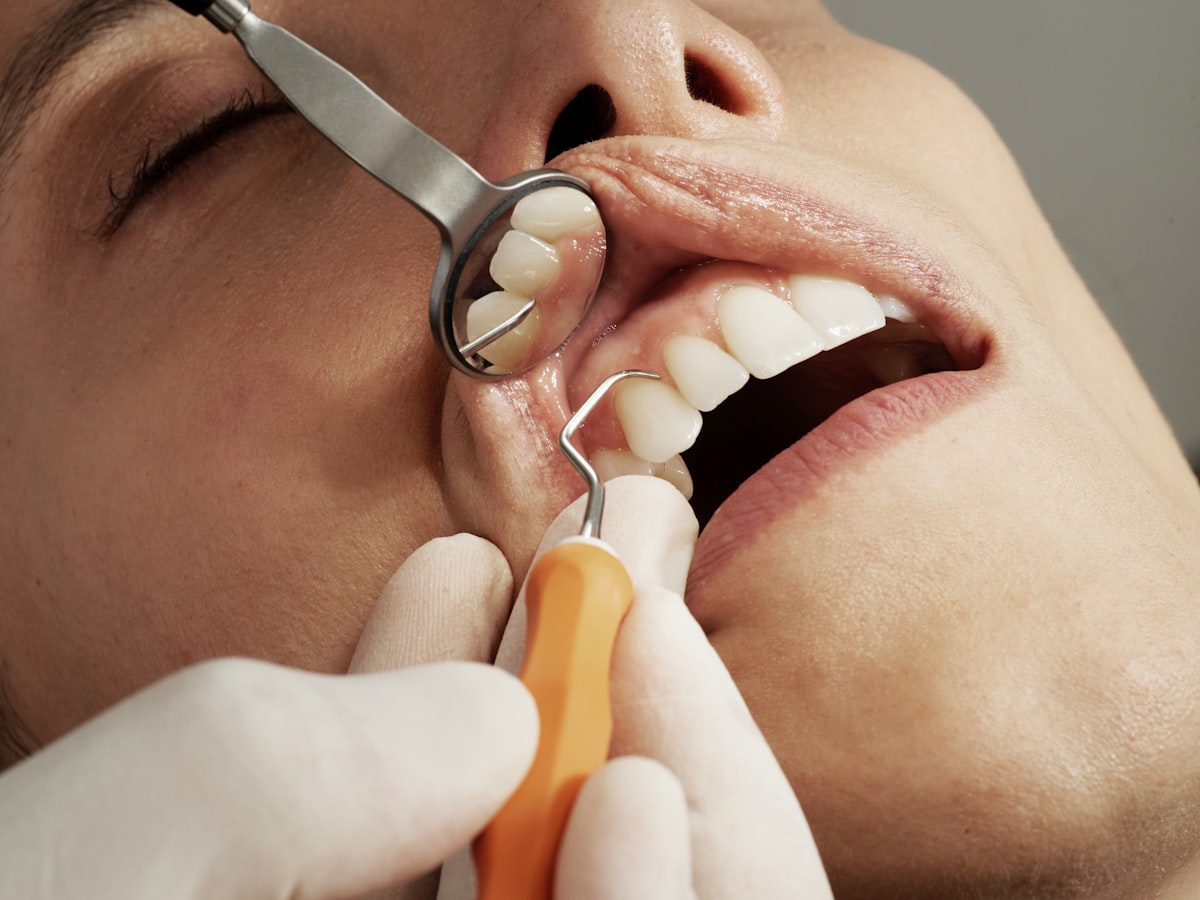
Botulinum toxin injections into the masseter and temporalis muscles reduce contraction intensity and are effective for severe cases — but require repeating every four to six months and, again, do not address the CNS origin. Clonazepam has shown benefit in short-term studies but carries dependence risk and belongs only in neurologist- or psychiatrist-supervised protocols.
One thing consistently shown not to work: occlusal adjustment (grinding down teeth to change the bite) as a bruxism treatment. This approach was effectively falsified by the 2013 consensus. The bite is not the cause; it may be a consequence of years of wear, but it is not the source of the signal.
The broader point is this: a bruxism diagnosis is a window into your nervous system, not just your dentition. The dentist can see the evidence. The cause is elsewhere.
Sources:
- Lobbezoo F, Ahlberg J, Glaros AG, et al. Bruxism defined and graded: an international consensus. Journal of Oral Rehabilitation. 2013. PMID: 23121262
- Zieliński G, Pająk A, Wójcicki M. Global prevalence of sleep bruxism and awake bruxism in pediatric and adult populations. Journal of Clinical Medicine. 2024. DOI: 10.3390/jcm13144259
- Li D, Kuang B, Lobbezoo F, et al. Associations between sleep bruxism and sleep-disordered breathing. Journal of Clinical Sleep Medicine. 2023. PMID: 36448332 / DOI: 10.5664/jcsm.10348
- Polmann H, Réus JC, Massignan C, et al. Association between sleep bruxism and stress symptoms in adults. Journal of Oral Rehabilitation. 2021. PMID: 33377534
- Kuhn M, Türp JC. Risk factors for bruxism. Frontiers in Neurology. 2020. DOI: 10.3389/fneur.2020.590779
- Osses-Anguita ÁE et al. Influence of the COVID-19 pandemic on bruxism-related disorders in dental students. International Journal of Environmental Research and Public Health. 2023. PMC: 9916215 / DOI: 10.3390/ijerph20032452
- Neural substrates of bruxism: dopaminergic and serotonergic pathways. Frontiers in Neurology. 2024. PMC: 11473305 / DOI: 10.3389/fneur.2024.1451183
- Ntagianta E et al. Neurobiological mechanisms of stress-induced bruxism. Biomedical Reports. 2024. DOI: 10.3892/br.2024.1747