№ 13 · EVIDENCE
Oil pulling: ancient ritual under the scientific microscope
June 06, 2026 · QDRO
In 2025, a research group at the Medical University of Innsbruck published a triple-blind randomized controlled trial with a finding that would have seemed absurd to most dental researchers a decade ago: a tablespoon of sesame oil, swished around the mouth for 15 minutes per day, reduced approximal dental plaque significantly more than distilled water over 8 weeks — with a p-value of 0.023. Another trial, also published in Clinical Oral Investigations in 2025, showed that coconut oil lowered IL-6 and TNF-α levels in gingival crevicular fluid comparably to chlorhexidine — the gold standard of antiseptic oral care.
Neither result appeared in a fringe publication. Neither came from a single group. And neither is simple to dismiss.
The practice in question is oil pulling — kavala or gandusha in Ayurvedic texts, described for millennia as a remedy for tooth decay, gum disease, and bad breath. Western dentistry spent most of the twentieth century treating it as folklore. The twenty-first century is looking more complicated.
The biochemistry of swishing fat
The mechanism is not mysterious once you understand what happens at the molecular level.
Vegetable oil entering the mouth encounters an alkaline environment — saliva buffered at roughly pH 6.8–7.2 — along with salivary enzymes including lipases. Under these conditions, oil undergoes partial saponification: fatty acid chains detach and form soap-like structures that disrupt bacterial cell membranes. This is the same basic chemistry that makes soap clean skin, applied to oral pathogens.
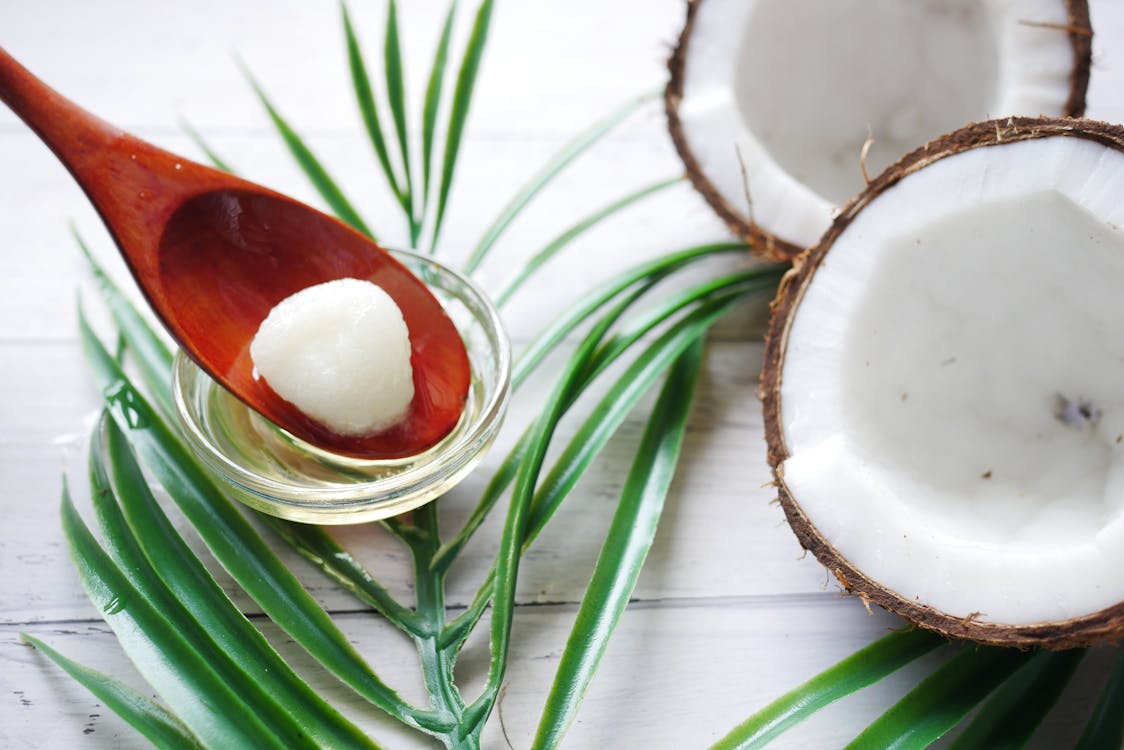
Coconut oil illustrates the process particularly well. Approximately 50% of its fatty acid profile is lauric acid, which in oral conditions partially converts to monolaurin — a monoglyceride with documented antimicrobial activity. Monolaurin inserts into the lipid bilayers of gram-positive bacteria, including Streptococcus mutans (the primary cariogenic pathogen) and Treponema denticola (a key player in periodontitis). The membrane destabilizes. The cell lyses.
This is not theoretical. It has been demonstrated in vitro and reproduced in clinical settings.
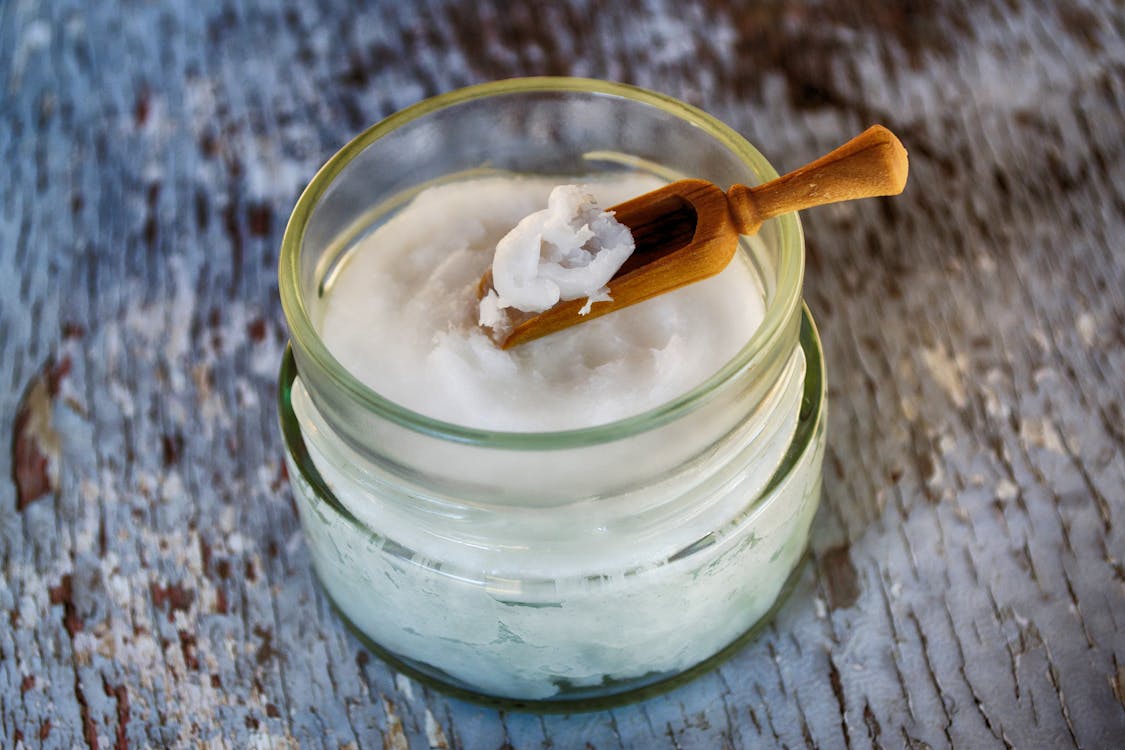
The second mechanism is mechanical. Oil is substantially more viscous than water or standard mouthwash. When actively swished, it penetrates interdental spaces and subgingival areas, creating a physical barrier and dislodging the loose outer layers of the biofilm matrix. Bacteria that have not yet strongly adhered to tooth surfaces are carried away when the oil is expelled.
The third mechanism involves hydrophobic adsorption. Certain oral pathogens carry hydrophobic surface structures that preferentially interact with lipid phases rather than aqueous ones. The oil, in a sense, pulls them out of the salivary fluid — which is where the name may have originated.
What distinguishes oil from chlorhexidine at the mechanistic level is selectivity. Chlorhexidine is a broad-spectrum cationic antiseptic: it binds to cell membranes regardless of whether they belong to pathogens or commensals. Extended use disrupts the healthy oral microbiome, causes tooth staining, and alters taste perception. Lauric acid and its derivatives act preferentially on gram-positive pathogens with specific lipid compositions. A 2025 study using 16S rRNA sequencing showed that the proportion of Streptococcaceae — which includes beneficial commensal streptococci — actually increased in the coconut oil group as pathogenic Spirochaetaceae and Tannerellaceae declined.
The evidence: what it shows and what it does not
Transparency first: the evidence base for oil pulling is modest in size. Most trials have small sample sizes. A significant portion come from a handful of research groups in India. The 2024 systematic review by Jong et al. (PMID 37635453), which searched Medline and Embase through April 2023, concluded the quality of evidence was "very low" for most clinical outcomes. This is the context that should frame everything that follows.
The early trials (2008–2009). Asokan et al. conducted a series of triple-blind RCTs with n=20 each. Sesame oil significantly reduced S. mutans counts in dental plaque: p=0.01 at one week, p=0.008 at two weeks (PMID 18408265). A follow-up trial compared sesame oil against chlorhexidine in gingivitis: both showed statistically significant reductions in Plaque Index and Modified Gingival Index with p<0.001, with no significant difference between groups (PMID 19336860). Small samples, but reproducible results across independent trials.
The 2016 comparison (PMID 27084861). Kaushik et al. compared coconut oil to chlorhexidine over two weeks and found a 45% reduction in total bacterial counts for coconut oil versus 53% for chlorhexidine — a gap that the authors characterized as comparable rather than conclusive.
The 2022 meta-analysis (PMC9602184). Suri et al. pooled 9 RCTs with a combined n=344. Plaque Index and Gingival Index showed no significant difference from control (MD −0.10 and −0.05 respectively, both non-significant). However, bacterial colony counts in saliva showed a significant reduction: MD 17.55, 95% CI 2.56–32.55, p=0.02. Salivary microbial load decreases measurably, even when this does not immediately translate to improved clinical indices.
The Innsbruck RCT (PMC11717832, 2025). Brandl et al. designed an 8-week parallel-group RCT with 40 participants. Sesame oil (15 minutes daily) reduced approximal plaque significantly more than distilled water: 24.07% vs 14.29% at week 4, 16.00% vs 5.36% at week 8 (p=0.023 for the approximal-surface plaque index). Gingival Index showed no significant change — but approximal surfaces are exactly where a toothbrush consistently underperforms. This is arguably the most methodologically rigorous oil pulling trial to date.
The periodontal microbiome trial (PMC11909057, 2025). Triple-blind RCT, n=30, three arms: coconut oil, chlorhexidine, placebo — all as adjuncts to non-surgical periodontal therapy over one month plus one month follow-up. Coconut oil selectively suppressed Spirochaetaceae and Tannerellaceae, the families containing T. forsythia and T. denticola, while increasing Streptococcaceae share. Reductions in IL-6 and TNF-α in gingival crevicular fluid were comparable to chlorhexidine.
Chronic periodontitis trial (PMC11780085, 2025). Clinical trial, n=30, three groups. Coconut oil reduced both bacterial and viral load and lowered IL-6/TNF-α comparably to chlorhexidine. Distilled water control showed no significant changes (p<0.05 versus control in both active groups).
The summary picture: salivary microbial reduction is the most consistently reproduced effect. Clinical indices (plaque, gingivitis) show modest improvement that strengthens with duration. Inflammatory markers in periodontitis — the freshest and most clinically interesting data — show effects comparable to chlorhexidine, though on small samples.
Practical implications
Oil pulling does not replace brushing. It does not replace flossing. It does not treat caries. Ayurvedic marketing has overclaimed for decades, and it is worth being blunt: the evidence does not support using oil as a substitute for any established oral hygiene practice.
What oil pulling does, according to the current evidence:
- Reduces salivary concentrations of S. mutans and other pathogens (robust, reproducible finding).
- Reduces approximal plaque by 16–24% with consistent daily use over 4–8 weeks.
- In periodontitis, reduces IL-6 and TNF-α in gingival fluid comparably to chlorhexidine — without chlorhexidine's staining, dysgeusia, or microbiome disruption.
What it does not do: whiten teeth. Any brightening effect reflects mechanical plaque removal, not a chemical reaction with enamel. Oil contains no peroxides and does not alter dentin color.
The protocol supported by clinical data: sesame or coconut oil, 15 minutes, in the morning before eating, before brushing. Expel into the trash (not the drain — oil solidifies in pipes), rinse with water, then brush normally.
Why before eating? Pathogen counts in saliva are highest after overnight accumulation. The oil acts as an adsorbent — higher target concentration means greater uptake.
Why before brushing? Because toothpaste breaks the oil emulsion and flushes the reaction products before they can work.
Fifteen minutes is not arbitrary — it is the duration used across the majority of published protocols. Starting at 5–7 minutes is practical; working up to 15 is achievable within a week or two. The oil should turn milky-white and slightly frothy: that is the emulsion forming, which indicates the chemistry is working.
For anyone who already maintains a solid baseline — brushing twice daily, flossing consistently, attending regular check-ups — oil pulling represents a low-cost, low-risk adjunct with genuine evidence behind it. The data has moved beyond folklore. It has not yet reached the level of a strong clinical recommendation. Somewhere in that gap is a practice that is reasonable to adopt, honest to describe, and worth understanding correctly.
Sources: PMID 18408265 (Asokan et al., J Indian Soc Pedod Prev Dent, 2008) · PMID 19336860 (Asokan et al., Indian J Dent Res, 2009) · PMID 27084861 (Kaushik et al., J Clin Diagn Res, 2016) · DOI 10.3390/healthcare10101991 / PMC9602184 (Suri et al., Healthcare MDPI, meta-analysis, 2022) · DOI 10.1111/idh.12725 / PMID 37635453 (Jong et al., Int J Dent Hyg, 2024) · DOI 10.1007/s00784-024-06134-y / PMC11717832 / PMID 39786483 (Brandl et al., Clin Oral Investig, 2025) · DOI 10.1007/s00784-025-06267-8 / PMC11909057 (Clin Oral Investig, 2025) · PMID 39886355 / PMC11780085 (J Oral Biol Craniofac Res, 2025)