№ 25 · CHEMISTRY
Whitening Strips: Clinical Evidence, Risks, and the Case for Smarter Chemistry
June 06, 2026 · QDRO
A single whitening strip delivers more active oxidant to your enamel in 30 minutes than a year of whitening toothpaste. That's not a marketing claim — it's basic chemistry. Yet roughly three-quarters of people who use strips report tooth sensitivity, and many quit before they see results.
The sensitivity problem isn't inevitable. It's a formulation problem. Understanding how hydrogen peroxide works — and what potassium nitrate and nano-hydroxyapatite actually do inside the tooth — explains why the chemistry of modern strips matters as much as their active ingredient concentration.
How hydrogen peroxide whitens: free radicals and the organic matrix
Enamel is not a uniform solid. At the microscopic scale it is a highly organised mineral lattice — hydroxyapatite crystals aligned in rods — with a small but functionally important organic fraction: proteins and lipids that fill the spaces between rods. Chromogens (stain molecules from coffee, tea, wine, and tobacco) accumulate in this organic matrix and in the underlying dentine.
Hydrogen peroxide enters enamel within minutes of application. Because it is a small, uncharged molecule it diffuses freely through the aqueous channels between enamel rods, reaching dentine and the pulp chamber within minutes at the concentrations used in strips (PMID 1402591). Once inside, it decomposes into hydroxyl radicals (•OH) and perhydroxyl radicals (HO₂•) — highly reactive species that attack the conjugated double-bond systems in chromogen molecules. These double bonds are what make stains absorb visible light and look dark. When the bonds break, the molecules stop absorbing light in the visible range. The tooth looks lighter.
This is true bleaching — a structural change in the molecules responsible for tooth colour — not polishing or optical illusion. A meta-analysis of 6% hydrogen peroxide whitening strips (PMID 19233534) found that peroxide strips consistently produced measurable lightening (more than 3 shades over two weeks) versus baseline, with a favourable safety profile.
At 6% H₂O₂ — the concentration now widely used in consumer strips — a 2-week course produces shade improvement comparable to in-office treatments at lower concentrations, with a safety profile well within regulatory thresholds for OTC use. A meta-analysis of 6% H₂O₂ whitening strips (PMID 19233534) confirmed that daily wear over 14 days produced statistically significant whitening (more than 3 shades) with a favourable safety profile.
The sensitivity problem: fluid dynamics inside dentine
Whitening strips work. The difficulty is that they hurt — frequently, and sometimes severely enough to halt treatment.
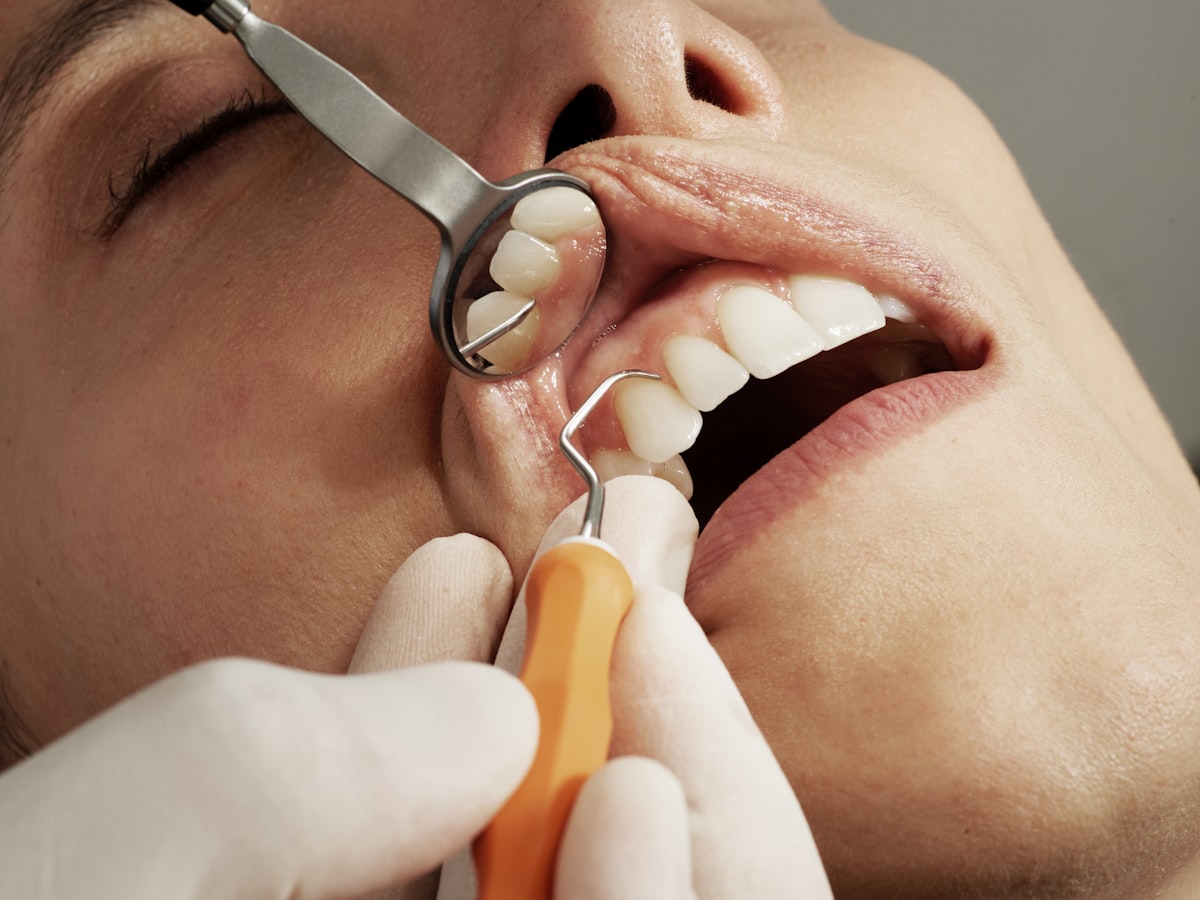
The mechanism of peroxide-induced sensitivity is now well understood. Dentine is not a passive mineral block. It contains millions of microscopic channels — dentinal tubules — running from the pulp (the living tissue at the tooth's core) outward toward the enamel-dentine junction. These tubules are filled with fluid. When the pressure or thermal environment around the tooth changes, the fluid moves. The movement stimulates nerve endings in the pulp, producing the sharp, short-lived pain characteristic of dentine hypersensitivity.
Hydrogen peroxide amplifies this effect through two routes. First, it penetrates rapidly to dentine and beyond: studies measuring pulp chamber peroxide levels after bleaching confirm that peroxide reaches the pulp in detectable concentrations within minutes (PMID 1402591). Second, by disrupting the organic matrix of dentine, repeated peroxide exposure may temporarily widen tubule openings, increasing fluid conductance.
A systematic review and network meta-analysis (PMID 40484311) found that tooth sensitivity is a common adverse effect of peroxide whitening, with higher concentrations associated with greater risk and intensity — though on average sensitivity is mild across agents and concentrations. Sensitivity remains a primary limiting factor for patient compliance in home whitening.
This is the design problem. A strip that whitens reliably but causes enough discomfort that people stop using it has failed at a system level.
Potassium nitrate: blocking the signal at the tubule
The standard dental response to sensitivity is potassium nitrate (KNO₃), and it appears in sensitivity-relief toothpastes at concentrations of 5%. The mechanism is electrochemical: potassium ions (K⁺) diffuse into dentinal tubules, where they accumulate around nerve fibre endings and raise the local extracellular potassium concentration. This depolarises the nerve membrane and raises its firing threshold — the nerve becomes less excitable and responds less readily to hydrodynamic stimuli.
Critically, this effect is supported by pooled clinical data. A systematic review and meta-analysis (PMID 25913140) of potassium nitrate (with fluoride) as a desensitiser during bleaching found a reduced risk of tooth sensitivity (pooled odds ratio 0.45, 95% CI 0.28–0.73) and lower sensitivity intensity (standardised mean difference −0.47), without a consistent effect on whitening outcome. For inclusion in a whitening strip, the implication is direct: KNO₃ in the strip matrix works in parallel with the whitening agent, pre-conditioning nerve endings during the same application that exposes them to peroxide.
At 0.80% — the concentration in formulas such as the Onuge ONJ-6HPG-A4, one of the few consumer strips to combine active whitening with desensitising and remineralising ingredients — KNO₃ represents a deliberate trade-off. It is below the 5% concentrations studied in dedicated sensitivity products, but in a strip applied daily for two weeks the cumulative exposure is meaningful. The key is that the K⁺ ions are present during whitening, not applied separately afterward.
Nano-hydroxyapatite: rebuilding what peroxide disturbs
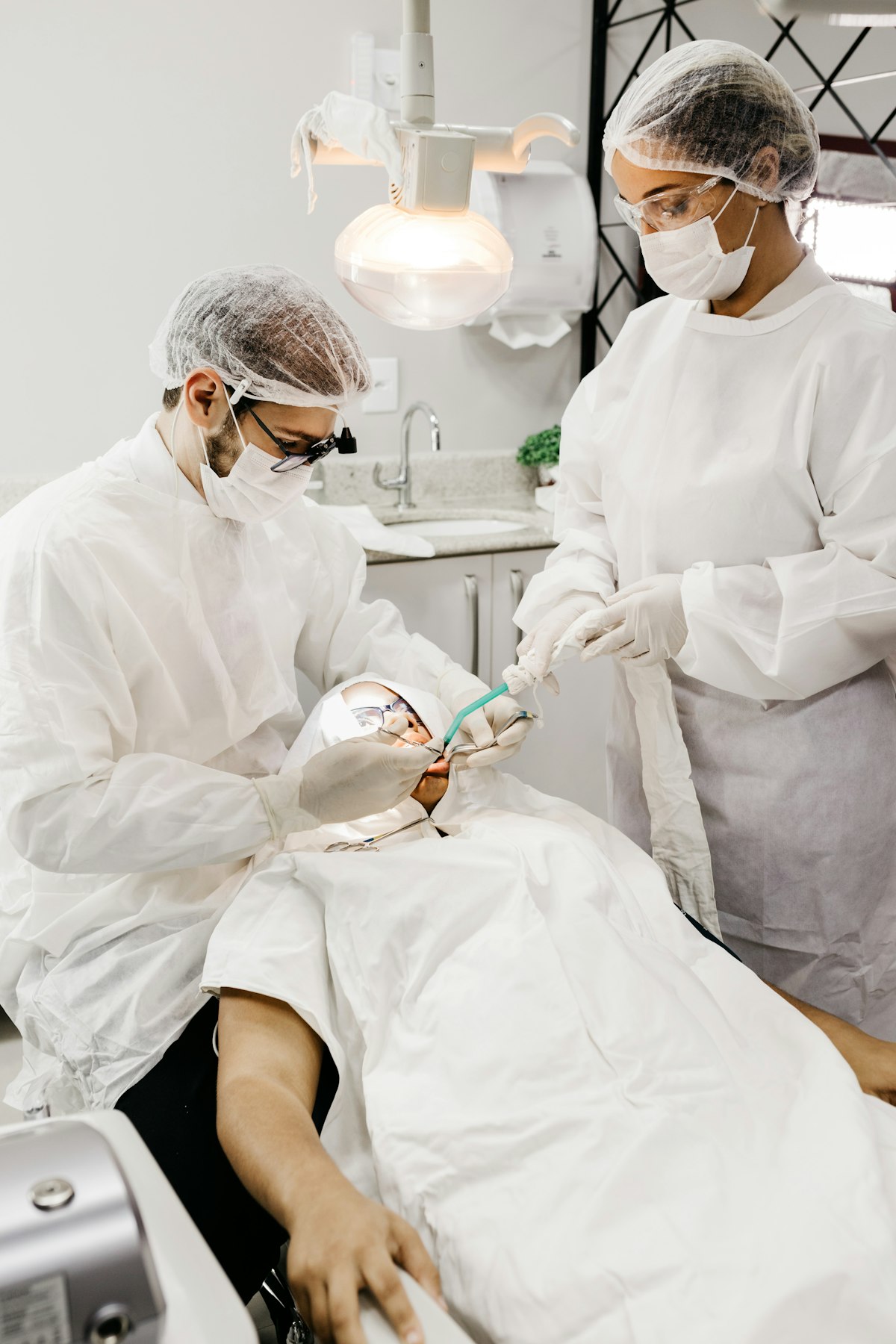
The second concern about peroxide strips — beyond sensitivity — is the effect on enamel mineral density. Enamel demineralisation during whitening is a real but often overstated risk. An experimental study of nano-hydroxyapatite gel applied after bleaching (PMID 40193552) found that it improved the physical and morphological properties of the enamel surface — higher microhardness and Ca/P ratio, lower surface roughness — without reducing whitening effectiveness, showing that mineral changes from peroxide can be actively countered.
The word "transient" matters: enamel is bathed in saliva that contains calcium and phosphate ions. As long as the pH stays above the critical dissolution threshold (~5.5) and mineral precursors are available, enamel remineralises naturally. The problem is that during active whitening treatment, especially in users with already hypomineralised or porous enamel, the balance can tip toward net mineral loss.
Nano-hydroxyapatite (nHAp) directly addresses this. At particle sizes of 20–100 nm, synthetic hydroxyapatite (Ca₁₀(PO₄)₆(OH)₂) — the same mineral that constitutes ~96% of enamel by weight — integrates into enamel surface defects, filling micropores and occluding the opening of dentinal tubules. A randomised clinical trial (PMID 22863133) found that an nHAp paste used after peroxide bleaching significantly reduced the number of days of bleaching-related tooth sensitivity versus placebo, without affecting the whitening result — exactly the protective effect needed alongside a whitening agent.
At 1% nHAp in a strip, the concentration is modest but the delivery context is favourable: the HPMC (hydroxypropyl methylcellulose) film-former that gives whitening strips their structure creates intimate, extended contact between the formula and enamel. Unlike a toothpaste rinsed away in seconds, a strip holds its contents against the tooth surface for 30 minutes. That extended contact time is why lower concentrations of both active and adjunct ingredients can be effective in strip format.
The formula as a system: why all four components matter together
Viewing a whitening strip formula as a list of independent ingredients misses the point. The HPMC matrix, glycerin, and PVP (polyvinylpyrrolidone) are not inert carriers — they control water activity, adhesion, and the rate of H₂O₂ release. A slower, more controlled peroxide release from a viscous matrix produces less peak oxidative stress on pulp tissue than a fast-dissolving gel.
The complete picture: 6% H₂O₂ delivers clinically meaningful whitening. KNO₃ at 0.80% begins desensitising nerve endings during the very application that whitens. nHAp at 1% fills surface defects and partially occludes tubule openings, addressing both remineralisation and sensitivity from the physical side. The HPMC film moderates peroxide delivery kinetics.
This is what formulation science is for: not stacking claims, but engineering trade-offs so that the treatment is tolerable enough to complete.
Research groups developing the next generation of whitening systems are pursuing exactly this direction: combining lower active concentrations with remineralising co-agents to achieve comparable efficacy with substantially less sensitivity. The QDRO approach with the ONJ-6HPG-A4 formula reflects this convergence: treating the whitening strip not as a delivery vehicle for bleach, but as a precision intervention that whitens, protects, and desensitises simultaneously.

What the evidence says about safety at 6%
Regulatory frameworks in the EU and US permit up to 6% H₂O₂ in OTC consumer strips. The scientific basis for this threshold comes from extensive clinical data showing that at this concentration, with typical 30-minute daily application, pulp damage is not observed, enamel microhardness changes are within recovery range, and adverse event rates are low — with sensitivity being the dominant complaint rather than any structural harm.
A review of dental whitening (PMID 32615235) covering whitening chemistry, safety and side effects concluded that, used as directed, the main adverse effect is tooth sensitivity rather than structural harm. Sensitivity, when it occurs, is generally mild and reversible, resolving after treatment ends.
The caveat is "as directed." Strip overuse — applying for longer than recommended, using higher-than-labelled concentrations, or continuing through significant sensitivity — can produce gingival irritation and more pronounced enamel effects. The formulation innovations described above are partially a response to the real-world observation that clear guidelines don't fully prevent misuse, and that building protective chemistry into the strip itself is a more robust solution than relying on compliance.
The direction of travel
The whitening strip is nearly 35 years old as a product category. The core chemistry — peroxide diffusing through enamel, breaking chromogen double bonds — hasn't changed because it doesn't need to. What has changed is the understanding that whitening is an intervention with systemic effects on tooth biology, and that the formula should account for those effects.
The clinical evidence supports 6% H₂O₂ as effective and safe. The sensitivity data supports co-delivery of potassium nitrate as a nerve desensitiser. The remineralisation literature supports nHAp as a protective co-ingredient with evidence independent of its whitening context. Combining all three in a controlled-release matrix is not a marketing formula — it is an evidence-based response to the documented limitations of first-generation strips.
The next benchmark will not be "how white" but "how comfortable and how safe over repeated courses." That is already where the research is pointing.
Sources:
- PMID 1402591 — Cooper JS et al., J Endod, 1992 — penetration of peroxide bleaching agents into the pulp chamber
- PMID 19233534 — Gerlach RW, J Dent, 2009 — meta-analysis of 6% hydrogen peroxide whitening strip effectiveness and safety over 2 weeks
- PMID 40484311 — Terra RMO et al., J Dent, 2025 — systematic review and network meta-analysis of at-home bleaching agents and tooth sensitivity
- PMID 25913140 — Wang Y et al., J Dent, 2015 — meta-analysis: potassium nitrate and sodium fluoride reduce tooth sensitivity during bleaching
- PMID 40193552 — Dicle AT et al., Oper Dent, 2025 — nano-hydroxyapatite gel improves enamel properties after bleaching
- PMID 22863133 — Browning WD et al., J Esthet Restor Dent, 2012 — RCT: nHAp paste reduces bleaching-related tooth sensitivity
- PMID 32615235 — Alkahtani R, J Dent, 2020 — review of dental whitening: chemistry, safety, sensitivity and reversibility